Startseite - Produkte - Siliziummetall - Informationen
Schmelzprozess von Silizium für die chemische Industrie
video
Schmelzprozess von Silizium für die chemische Industrie

Schmelzprozess von Silizium für die chemische Industrie

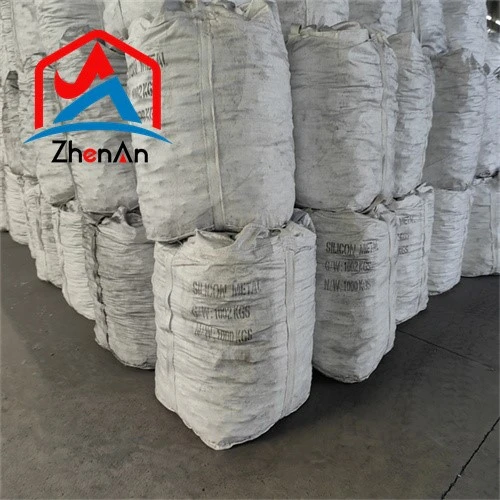
Granularität: individuell nach Kundenwunsch Verpackung: Tonnenweise Säcke, Fässer etc.

Beschreibung


Produktbeschreibung

Der technologische Prozess der Siliziumgewinnung für chemische Zwecke umfasst die Vorbereitung der Ofenbeschickung, das Schmelzen im Elektroofen, die Raffinierung und das Gießen von Silizium sowie das Zerkleinern zur Entfernung von Schlackeneinschlüssen. Alle Rohstoffe müssen vor der Bereitstellung der Charge einer notwendigen Behandlung unterzogen werden. Die Kieselsäure wird im Backenbrecher zerkleinert, bis die Größe der Stücke nicht mehr als 100 mm beträgt. Die Stücke, die kleiner als 5 mm sind, werden ausgesiebt und mit Wasser gewaschen. Da die Bruchstücke im Ofen im oberen Teil des Ofens geschmolzen werden, verringert sich die Gasdurchlässigkeit der Charge, was den Produktionsprozess erschwert. Petrolkoks hat eine relativ hohe elektrische Leitfähigkeit, daher darf er auf eine Größe von nicht mehr als 10 mm gebrochen werden und die Menge an Petrolkokspulver muss kontrolliert werden. Da es direkt an der Ofenmündung brennt, kommt es zu einem Mangel an Reduktionsmittel.


Bei der Herstellung von chemischem Silizium kann bituminöse Kohle Holzkohle vollständig ersetzen, wie z. B. raffinierte bituminöse Kohle von Hunan Zhuzhou, der feste Kohlenstoff erreicht 77,19 Prozent, die flüchtigen Bestandteile betragen 19,4 Prozent, der Aschegehalt beträgt 3,41 Prozent, der Fe2O3-Gehalt beträgt {{8 }},22 Prozent, der Al2O3-Gehalt beträgt 0,99 Prozent und der CaO-Gehalt beträgt 0,17 Prozent. . Gemäß der Produktionspraxis ist es möglich, diese Art von Steinkohle zur Verhüttung von chemischem Silizium zu verwenden.


Blöcke und Späne zur Herstellung von Silizium für chemische Zwecke werden mit Holzschneidern und Holzhackern verarbeitet. Das kohlenstoffhaltige Reduktionsmittel in der Ofenbeschickung besteht hauptsächlich aus Petrolkoks und Steinkohle, und die Menge an Holzblöcken und Holzspänen hängt von den Ofenbedingungen ab. Bei der Produktion wird kein Holz verwendet, aber die Produktqualität ist stabiler. Das Verhältnis der Ladung richtet sich nach der Qualität des herzustellenden Produkts. Der Anteil an Petrolkoks und Steinkohle richtet sich nach der Menge an Kohlenstoff, die für jede Charge Siliciumerz benötigt wird. Das Verhältnis von Petrolkoks und Steinkohle hat großen Einfluss auf den Arbeitswiderstand der Ladung.


Nachdem jede Komponente der Ofenbeschickung abgewogen wurde, wird die Beschickung gleichmäßig gemischt und nach dem Stampfen des Ofens wird die gleichmäßig gemischte Beschickung in den Ofen gegeben. Halten Sie eine bestimmte Höhe der Materialoberfläche ein und führen Sie das Material gleichmäßig ein.


Die chemische Siliziumproduktion ist kontinuierlich. Auch die Bedingungen im Ofen sind nicht ewig. Die chemische Siliziumproduktion ist ein Prozess, bei dem elektrische Energie in einem Elektroofen in Wärmeenergie umgewandelt wird und die Wärmeenergie dann zum direkten Erhitzen des Materials verwendet wird, um eine chemische Reaktion auszulösen. Daher sind die elektrischen Eigenschaften im Ofen sehr wichtig. Der Schmelzvorgang erfolgt im geschlossenen Lichtbogen, um die Hochtemperatur des Ofens aufrechtzuerhalten, den thermischen Wirkungsgrad zu verbessern und die Auslastung des Elektroofens zu verbessern. In der Forschung wird ein Metallsiliziumofen mit einer Leistung von 3200 kVA und 6300 kVA verwendet. Das Schmelzen erfolgt durch Kochen über einen bestimmten Zeitraum und regelmäßiges Kraftfutter. Unter normalen Umständen ist es schwierig, dass die Ladung automatisch sinkt, und es ist im Allgemeinen erforderlich, die Ladung zum Sinken zu zwingen. Der Ofenzustand kann leicht schwanken und ist schwer zu kontrollieren. Daher ist es notwendig, in der Produktion richtig zu urteilen und rechtzeitig damit umzugehen. Der Ofen wird alle 4 Stunden zum Reinigen und Gießen befeuert, die Schlacke wird gebrochen und sortiert in den Lagerraum eingelagert.
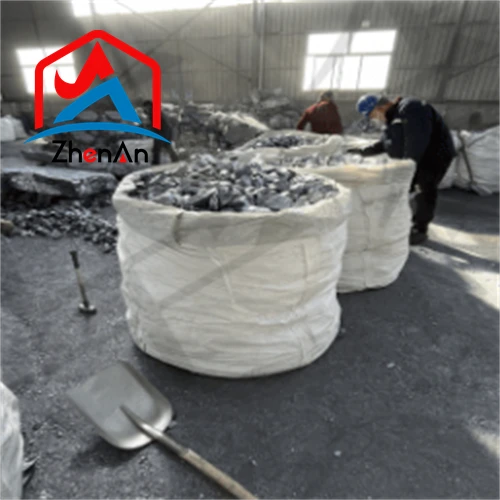
 

Smelting process of silicon for chemical industry  The technological process of silicon for chemical use includes furnace charge preparation, electric furnace smelting, silicon refining and casting, and crushing for removing slag inclusions. All raw materials must undergo necessary treatment before the charge is prepared. The silica is crushed in the jaw crusher until the size of the pieces is not more than 100mm, and the pieces smaller than 5mm are screened out and washed with water. Because the fragments in the furnace are melted in the upper part of the furnace, the gas permeability of the charge is reduced, making the production process difficult. Petroleum coke has a relatively high electrical conductivity, so it must be broken to a size of no more than 10mm, and the amount of petroleum coke powder must be controlled. Because it burns directly on the furnace mouth, it will cause insufficient reducing agent.  In the production of chemical silicon, bituminous coal can completely replace charcoal, such as Hunan Zhuzhou refined bituminous coal, the fixed carbon reaches 77.19%, the volatile matter is 19.4%, the ash content is 3.41%, the Fe2O3 content is 0.22%, the Al2O3 content is 0.99%, and the CaO content is 0.17%. . According to production practice, it is feasible to use this kind of bituminous coal to smelt chemical silicon.  Blocks and chips for the production of silicon for chemical use are processed with timber cutters and wood chippers. The carbonaceous reducing agent in the furnace charge is mainly petroleum coke and bituminous coal, and the amount of wood blocks and wood chips depends on the furnace conditions. Wood is not used in production, but the product quality is more stable. The ratio of the charge is determined according to the grade of the product required to be produced. The proportion of petroleum coke and bituminous coal is determined according to the amount of carbon required for each batch of ore silicon. The ratio of petroleum coke and bituminous coal has a great influence on the working resistance of the charge.  After each component of the furnace charge is weighed, the charge is mixed evenly, and after the furnace is pounded, the uniformly mixed charge is added to the furnace. Keep a certain height of the material surface and feed evenly.  Chemical silicon production is continuous. The conditions inside the furnace are not eternal either. Chemical silicon production is a process in which electric energy is converted into heat energy in an electric furnace, and then the heat energy is used to directly heat the material to produce a chemical reaction. Therefore, the electrical characteristics in the furnace are very important. The smelting operation is closed-arc to maintain the high temperature furnace, improve the thermal efficiency, and improve the utilization rate of the electric furnace. In the research, a metal silicon furnace with a capacity of 3200KVA and 6300KVA is used. The smelting is carried out by simmering for a certain period of time and regular concentrated feeding. Under normal circumstances, it is difficult for the charge to sink automatically, and it is generally necessary to force the charge to sink. The furnace condition is easy to fluctuate and difficult to control. Therefore, it is necessary to judge correctly and deal with it in time in production. The furnace is fired every 4 hours for scouring and casting, and the slag is broken and sorted into storage.Smelting process of silicon for chemical industry  The technological process of silicon for chemical use includes furnace charge preparation, electric furnace smelting, silicon refining and casting, and crushing for removing slag inclusions. All raw materials must undergo necessary treatment before the charge is prepared. The silica is crushed in the jaw crusher until the size of the pieces is not more than 100mm, and the pieces smaller than 5mm are screened out and washed with water. Because the fragments in the furnace are melted in the upper part of the furnace, the gas permeability of the charge is reduced, making the production process difficult. Petroleum coke has a relatively high electrical conductivity, so it must be broken to a size of no more than 10mm, and the amount of petroleum coke powder must be controlled. Because it burns directly on the furnace mouth, it will cause insufficient reducing agent.  In the production of chemical silicon, bituminous coal can completely replace charcoal, such as Hunan Zhuzhou refined bituminous coal, the fixed carbon reaches 77.19%, the volatile matter is 19.4%, the ash content is 3.41%, the Fe2O3 content is 0.22%, the Al2O3 content is 0.99%, and the CaO content is 0.17%. . According to production practice, it is feasible to use this kind of bituminous coal to smelt chemical silicon.  Blocks and chips for the production of silicon for chemical use are processed with timber cutters and wood chippers. The carbonaceous reducing agent in the furnace charge is mainly petroleum coke and bituminous coal, and the amount of wood blocks and wood chips depends on the furnace conditions. Wood is not used in production, but the product quality is more stable. The ratio of the charge is determined according to the grade of the product required to be produced. The proportion of petroleum coke and bituminous coal is determined according to the amount of carbon required for each batch of ore silicon. The ratio of petroleum coke and bituminous coal has a great influence on the working resistance of the charge.  After each component of the furnace charge is weighed, the charge is mixed evenly, and after the furnace is pounded, the uniformly mixed charge is added to the furnace. Keep a certain height of the material surface and feed evenly.  Chemical silicon production is continuous. The conditions inside the furnace are not eternal either. Chemical silicon production is a process in which electric energy is converted into heat energy in an electric furnace, and then the heat energy is used to directly heat the material to produce a chemical reaction. Therefore, the electrical characteristics in the furnace are very important. The smelting operation is closed-arc to maintain the high temperature furnace, improve the thermal efficiency, and improve the utilization rate of the electric furnace. In the research, a metal silicon furnace with a capacity of 3200KVA and 6300KVA is used. The smelting is carried out by simmering for a certain period of time and regular concentrated feeding. Under normal circumstances, it is difficult for the charge to sink automatically, and it is generally necessary to force the charge to sink. The furnace condition is easy to fluctuate and difficult to control. Therefore, it is necessary to judge correctly and deal with it in time in production. The furnace is fired every 4 hours for scouring and casting, and the slag is broken and sorted into storage.


Produktinhalt
Produktqualitäten Chemische Zusammensetzung Chemische Zusammensetzung Chemische Zusammensetzung Chemische Zusammensetzung
    Verunreinigungen (Prozent) Verunreinigungen (Prozent) Verunreinigungen (Prozent)
  Si-Gehalt (Prozent) Fe Al Ca
1101 99.79 0.1 0.1 0.01
2202 99.58 0.2 0.2 0.02
2502 99.48 0.25 0.25 0.02
3303 99.37 0.3 0.3 0.03
411 99.4 0.4 0.1 0.1
421 99.3 0.4 0.2 0.1
441 99.1 0.4 0.4 0.1
551 98.9 0.5 0.5 0.1
553 98.7 0.5 0.5 0.3
Häufig gestellte Fragen

F: Akzeptieren Sie OEM?
A: Ja, wir akzeptieren OEM. Das ist unsere Spezialität.

F: Sind Sie eine Fabrik oder ein Handelsunternehmen?
A: Wir sind Hersteller.

F: Sind Sie ein Hersteller oder Händler?
A: Wir sind wirklich ein Hersteller und können nicht nur qualitativ hochwertige Produkte zum besten Preis anbieten, sondern auch den besten Vorverkaufs- und Kundendienst bieten.

Kontaktiere uns

ZHENAN INTERNATIONAL CO., LTD


Mobil: plus 86-15515183635(whatsapp/wechat)


Fax: plus 86-372-5055180


Email: kevin@zaferroalloy.com


Website: www.zaferroalloy.cn


Adresse: 1-2510, Huafu-Bürogebäude, Anyang, Henan, China.

Beliebte label: Schmelzprozess von Silizium für die chemische Industrie

Das könnte dir auch gefallen

Einkaufstüten